Chinese Clothing Across the Dynasties
Every Chinese dynasty had a distinctive fashion identity, and remarkably, you can still visit the cities that shaped them. Walk the Silk Road starting point in Xi'an (Han dynasty), explore Song dynasty elegance in Hangzhou, and trace Ming imperial style through Beijing and Nanjing.
Han Dynasty (汉制)
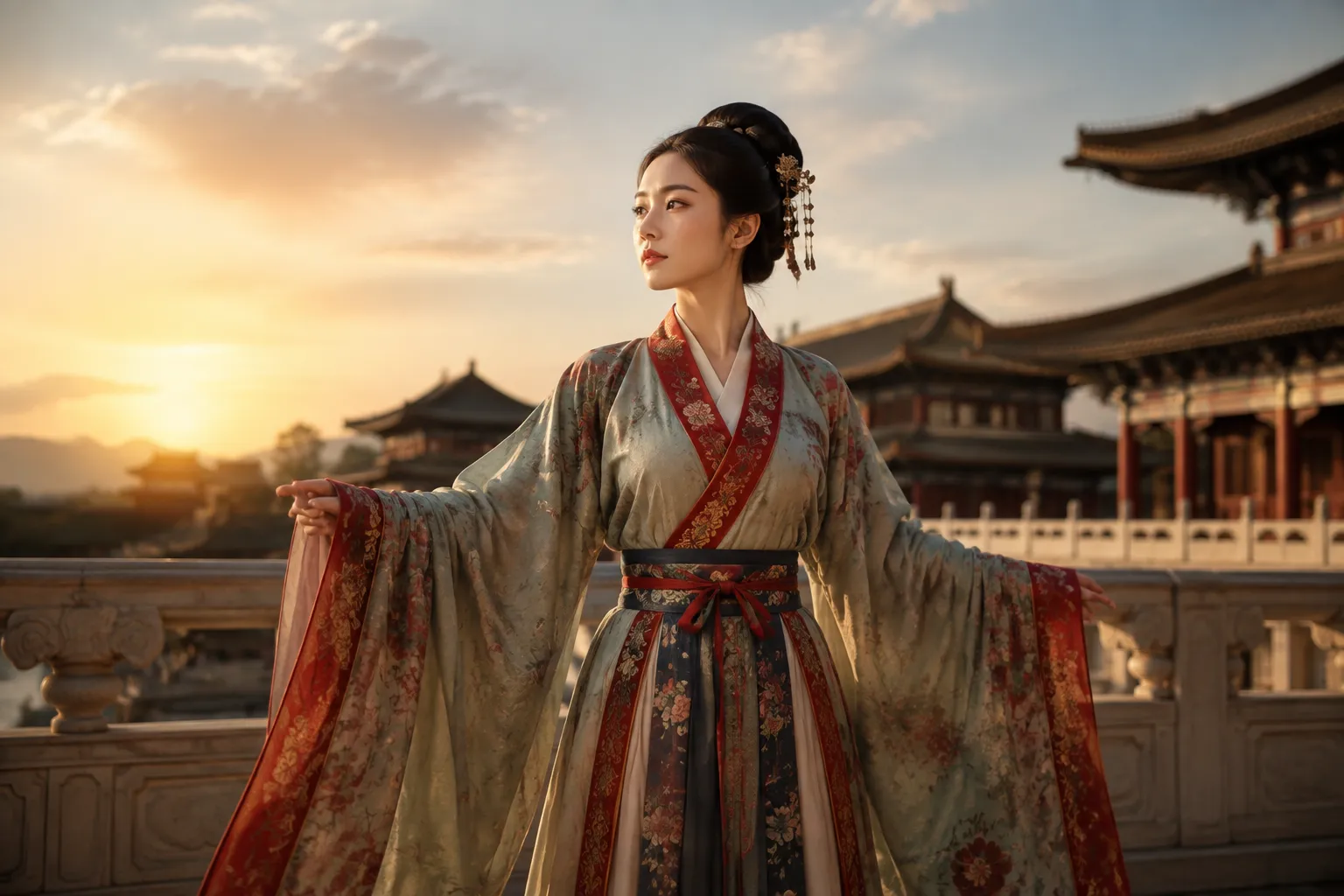
The Han dynasty gave us the very word 'Hanfu' (汉服) — clothing of the Han people. The classic Han silhouette featured a wrapped outer robe (jiaoling youren, meaning crossed collar worn right-over-left) with deep overlapping lapels and wide, flowing sleeves that could extend past the fingertips. A sash (dadai) cinched the waist, often with jade ornaments hanging from the belt.
Silk was the prestige fabric, with sericulture flourishing along the Silk Road's eastern terminus in Chang'an (modern Xi'an). Commoners wore hemp and ramie. Color hierarchy was strict: officials wore specific colors and patterns based on their rank, while the emperor alone could wear certain shades of yellow.
Xi'an — walk the Silk Road starting point, visit the Shaanxi History Museum for Han dynasty textile remnants.
Tang Dynasty (唐制)
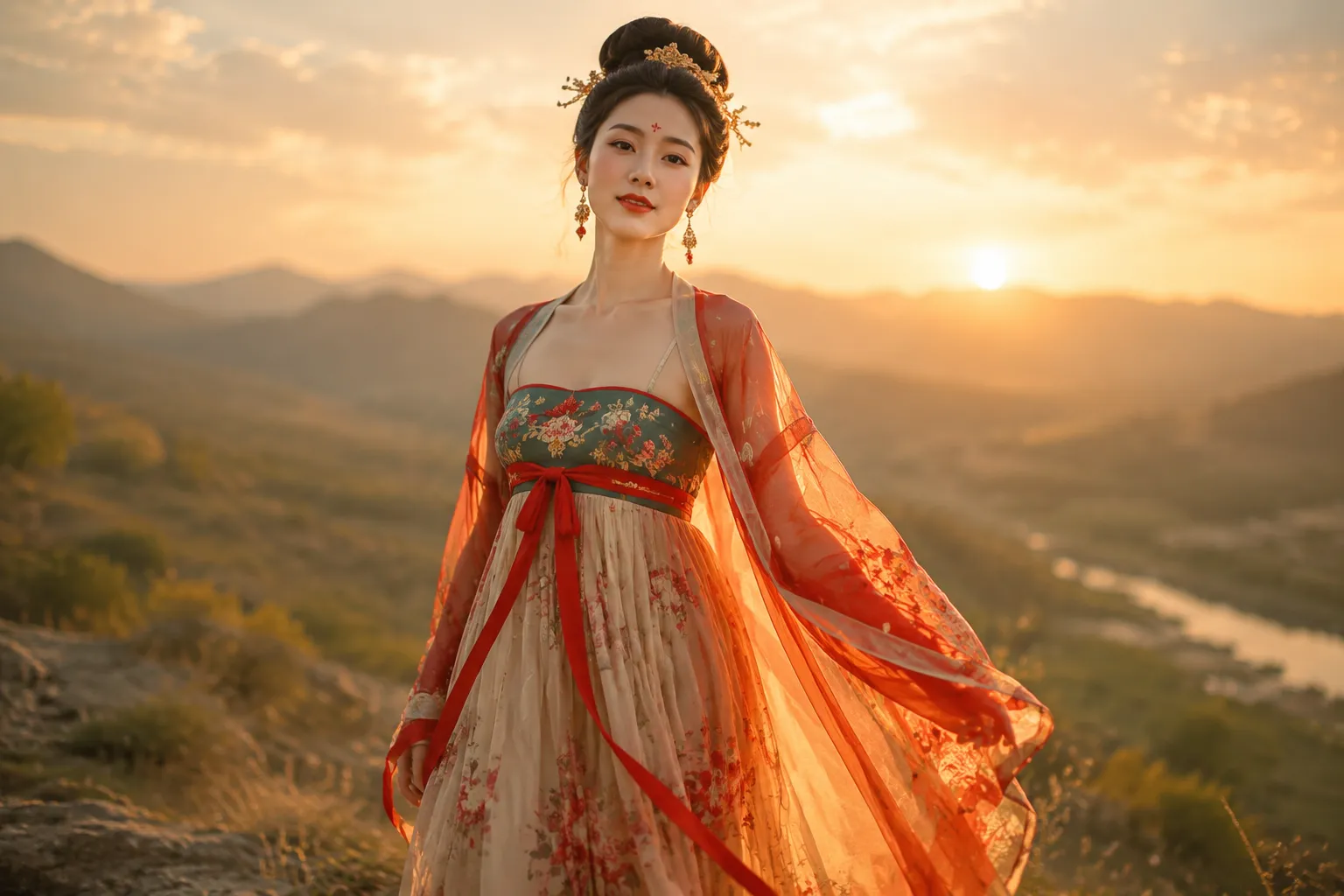
The Tang era was China's most cosmopolitan period — and its most daring in fashion. Women wore high-waisted ruqun skirts cinched above the chest, paired with short, open-front jackets (banbi) that exposed the neck and collarbone. Bold colors ruled: crimson, imperial yellow, emerald green.
Central Asian and Persian influences arrived via the Silk Road, introducing woven gold brocades, Sassanian roundel motifs, and even trousers for noble women who rode horses. The huadian — a decorative painted or pasted flower on the forehead — became the signature Tang beauty mark. Men's fashion featured round-collared robes with narrow sleeves and leather boots. The Tang court issued detailed sumptuary laws governing which colors, fabrics, and ornamentation each social rank could wear.
Xi'an (Daming Palace ruins host Tang costume festivals), Dunhuang (Mogao Caves murals vividly depict Tang fashion in Buddhist art).

Song Dynasty (宋制)
Where Tang was bold, Song was restrained. Neo-Confucian philosophy emphasized modesty and simplicity, producing a fashion of refined understatement that still reads as modern today. Women's garments narrowed: sleeves became fitted at the wrist, silhouettes grew straighter and less voluminous.
The beizi — a long, sleeveless or narrow-sleeved outer jacket worn open at the front — became the dynasty's signature piece, often reaching the ankles. Color palettes shifted to muted tones: celadon green, misty blue, pale lavender, ash gray. The literati scholar-official class drove men's fashion with simple, wide robes (daopao) and the iconic square-topped hat (putou). Embroidery became more refined as a domestic art, with Song embroiderers achieving unprecedented levels of detail on silk.
Hangzhou — the Southern Song imperial capital, where you can wear Song-style Hanfu by West Lake and visit the China National Silk Museum.

Ming Dynasty (明制)
After nearly a century of Mongol Yuan rule, the Ming dynasty explicitly revived Han Chinese clothing traditions as an act of cultural restoration. The iconic mamianqun (horse-face skirt) emerged: a wrap-around pleated skirt with flat front and back panels, typically in bright red or blue brocade.
Women paired these with stand-collar jackets (ao) that closed with ornate metal or jade buttons. The Ming introduced the buzi system — square embroidered rank badges sewn onto the chest and back of officials' robes, with birds denoting civil ranks and animals for military ranks. The circular collar (yuanlingpao) with coordinating cross-collar inner robe became the standard formal silhouette. Cloud-collar (yunjian) shawls with four cloud-shaped lobes were worn as decorative overlays. Ming fashion is the primary reference for today's Hanfu revival movement.
Beijing (Forbidden City and Ming Tombs), Nanjing (Ming Xiaoling Mausoleum — stunning red-wall photography backdrop).
Qing Dynasty (清制)
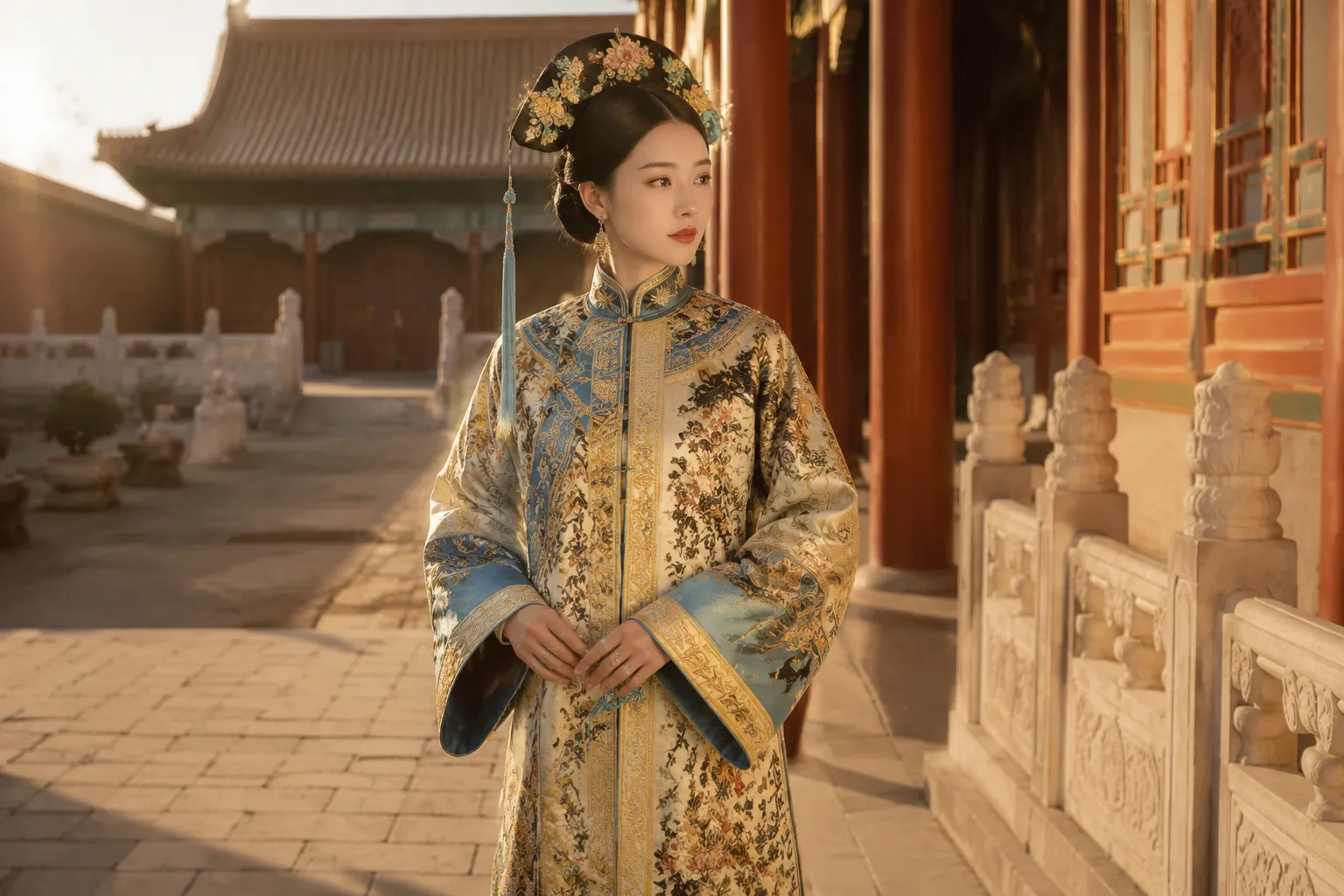
The Manchu conquest brought dramatic changes. The qizhuang (banner dress) introduced the changyi — a long, straight robe with side slits and wide sleeves with folded cuffs — which directly influenced the modern qipao. Manchu women wore a distinctive three-earring style and platform shoes with elevated central heels.
Han men were required to adopt the Manchu queue hairstyle (shaved forehead with a long braid), though Han women largely retained Ming-style dress for informal occasions. Court dress reached its apex of elaboration: officials wore layered dragon robes (jifu for semi-formal, chaofu for the most ceremonial occasions) with intricate rank badges, and empresses and high-ranking consorts wore phoenix coronets adorned with kingfisher feather inlay. The Qing textile industry produced some of history's most elaborate silk embroidery.
Shenyang (Mukden Palace, the original Manchu imperial seat), Beijing (Forbidden City Qing collections), Shanghai (where the Qing changyi evolved into the 1920s qipao).
Republican Era Dynasty (民国制)
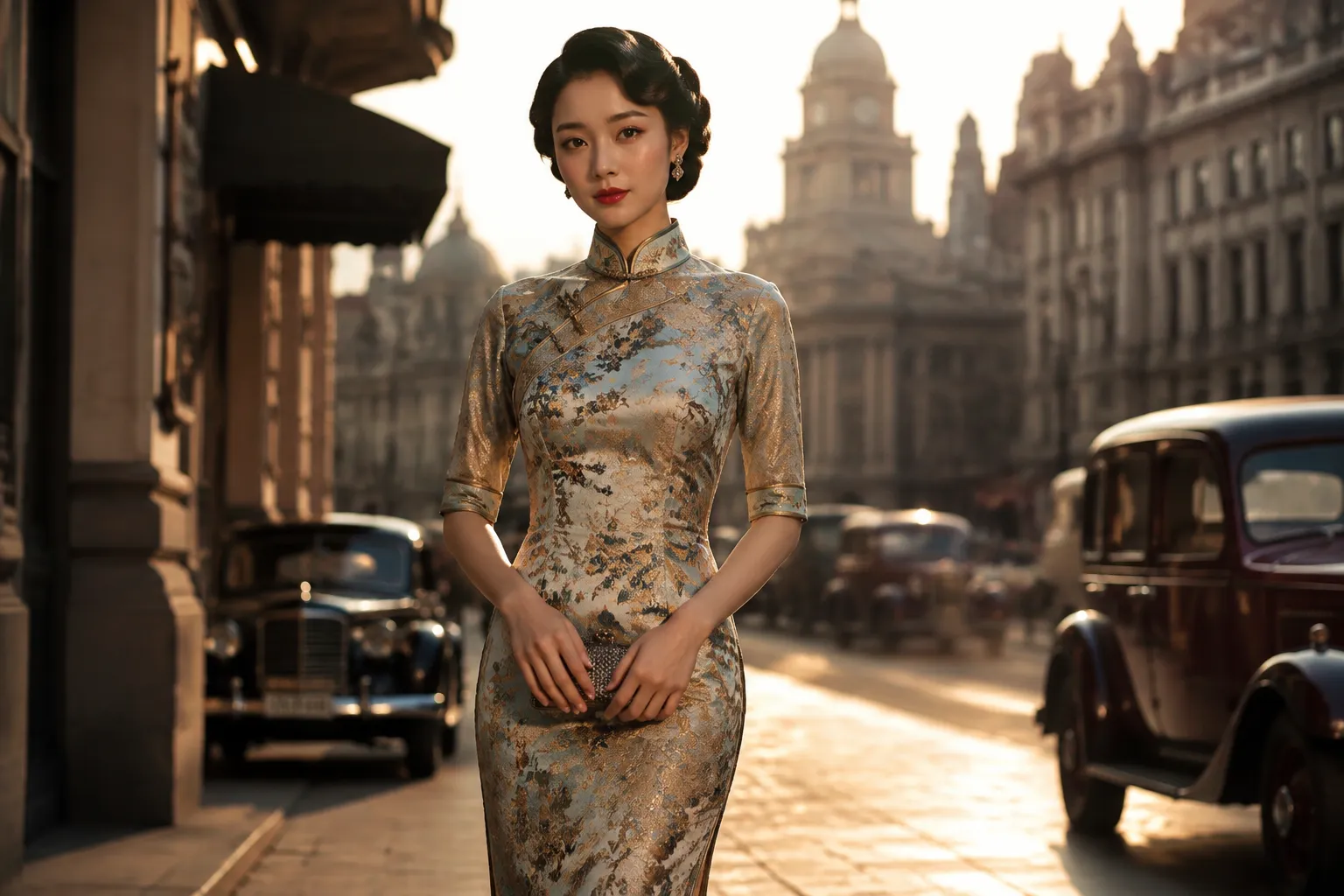
The fall of the Qing in 1912 triggered China's most rapid fashion transformation. The 1920s Shanghai qipao (cheongsam) fused Manchu robe structure with Western tailoring: body-hugging darts, higher side slits, and luxurious imported fabrics.
This was China's first genuinely modern women's garment, championed by socialites, movie stars, and the 'modern girl' (modeng nvlang) who defined Shanghai's jazz-age glamour. The 1930s qipao reached its peak — floor-length with high mandarin collars and delicate frog-button closures, often in printed silk. Simultaneously, the Zhongshan suit (based on Sun Yat-sen's design combining Western tailoring with Chinese symbolism) became the standard men's formalwear. The era also saw the rise of the first Chinese fashion magazines, department stores, and domestic designers.
Shanghai — the Bund's heritage architecture and the French Concession still echo this era. Visit the Shanghai History Museum for original 1930s qipaos.
Frequently Asked Questions About Chinese Dynasties & Fashion
Which dynasty has the most iconic Hanfu style?
The Tang Dynasty (618–907 AD) is widely considered the most iconic — its bold colors, chest-high ruqun skirts, and flowing silk shawls are instantly recognizable and heavily featured in films and TV dramas. Tang-style Hanfu is also the most popular for photoshoots today. The Ming Dynasty (1368–1644 AD) runs a close second, especially for the modern Hanfu revival movement which primarily references Ming styles.
How did Chinese clothing change from dynasty to dynasty?
Each dynasty's clothing reflected its political philosophy and cultural values. The Han established the foundational silhouette (crossed collars, wide sleeves). The Tang embraced bold, cosmopolitan styles influenced by Silk Road trade. The Song favored restrained elegance under Neo-Confucianism. The Ming revived Han traditions after Mongol rule and introduced the iconic mamian skirt. The Qing imposed Manchu styles including the queue hairstyle and banner dress. The Republican Era fused Chinese and Western fashion into the modern qipao.
Where can I see authentic dynasty-era clothing today?
The Palace Museum (Forbidden City) in Beijing holds the world's largest collection of imperial robes and textiles. The China National Silk Museum in Hangzhou is the largest silk and textile museum globally. The Shaanxi History Museum in Xi'an has Han and Tang dynasty textile remnants. The Shanghai Museum features Qing and Republican-era fashion. All four museums have English-language signage and are accessible to international visitors.
Can I wear Hanfu from different dynasties during one trip?
Absolutely — and many travelers do exactly this. Xi'an is the best city for this: you can rent Han dynasty-style robes for the city wall, then switch to Tang dynasty ruqun for Daming Palace on the same day. Hangzhou is ideal for Song-style beizi by West Lake. Beijing offers Ming-style formal wear for Forbidden City photos. Most cities have rental shops near major attractions; plan 30–60 minutes per costume change including hair and makeup.
Sources & Further Reading
- • China Culture.org — Ministry of Culture official resource on Chinese heritage and traditions
- • The Palace Museum (Forbidden City, Beijing) — original imperial robes and textile collections
- • China National Silk Museum (Hangzhou) — world's largest silk and textile museum
Ready to Wear a Dynasty?
Browse our Hanfu guide for detailed costume breakdowns, or jump to Plan Your Trip for itineraries that put you in the right city in the right costume.
Last verified: August 6, 2026 · Our editorial team reviews and updates all guides regularly to keep pricing, hours, and travel advice current.